Plastic SurgeryKris Jenner before and after, decade by decade: what she has confirmed, what surgeons only speculate, and what a deep plane facelift really involves.

A lumpy stomach after liposuction is usually normal and temporary. Learn the causes, timeline, and proven ways to smooth out lumps after lipo.
A lumpy stomach after liposuction is usually normal and temporary — it's part of how the body heals as swelling settles and tissues remodel. In most cases, the lumps and bumps soften and smooth out over 3 to 6 months, helped by compression garments and lymphatic massage. Persistent hard lumps beyond six months, or lumps with pain, redness, or fluid, are less common and should be checked by your surgeon.
This guide explains exactly why your stomach feels lumpy after lipo, how to tell normal healing from a problem, how long it lasts, and the proven ways to smooth things out.
Yes — feeling lumps, bumps, firmness, or unevenness in the weeks after liposuction is normal and expected for most patients. Liposuction disrupts fat and tissue under the skin, so the area swells and heals unevenly at first. As fluid drains and the tissue settles, the surface gradually becomes smoother. Early lumpiness is not a sign that your procedure failed; it's a stage of healing.
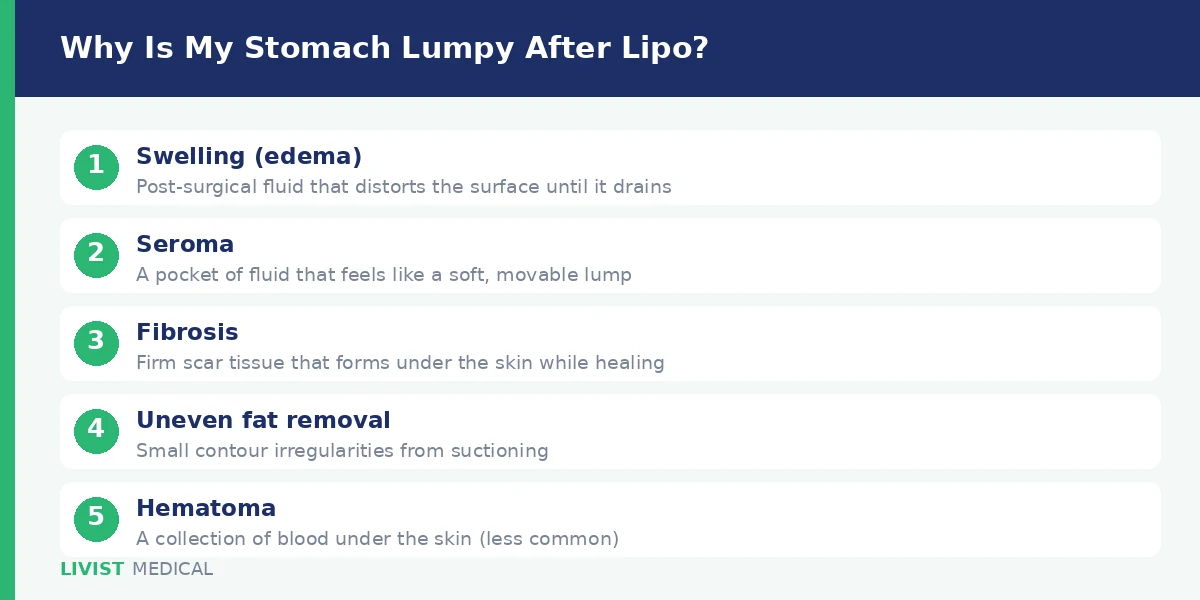
Several normal healing processes can make the stomach feel lumpy or hard:
| Cause | What it is |
|---|---|
| Swelling (edema) | Post-surgical fluid buildup that distorts the surface until it drains |
| Seroma | A pocket of fluid under the skin that can feel like a soft, movable lump |
| Fibrosis | Firm scar tissue that forms under the skin as part of healing |
| Uneven fat removal | Small contour irregularities from how fat was suctioned |
| Hematoma | A collection of blood under the skin (less common) |
The most common early causes are simple swelling and fibrosis, both of which usually improve with time and aftercare.

| Usually normal | Worth getting checked |
|---|---|
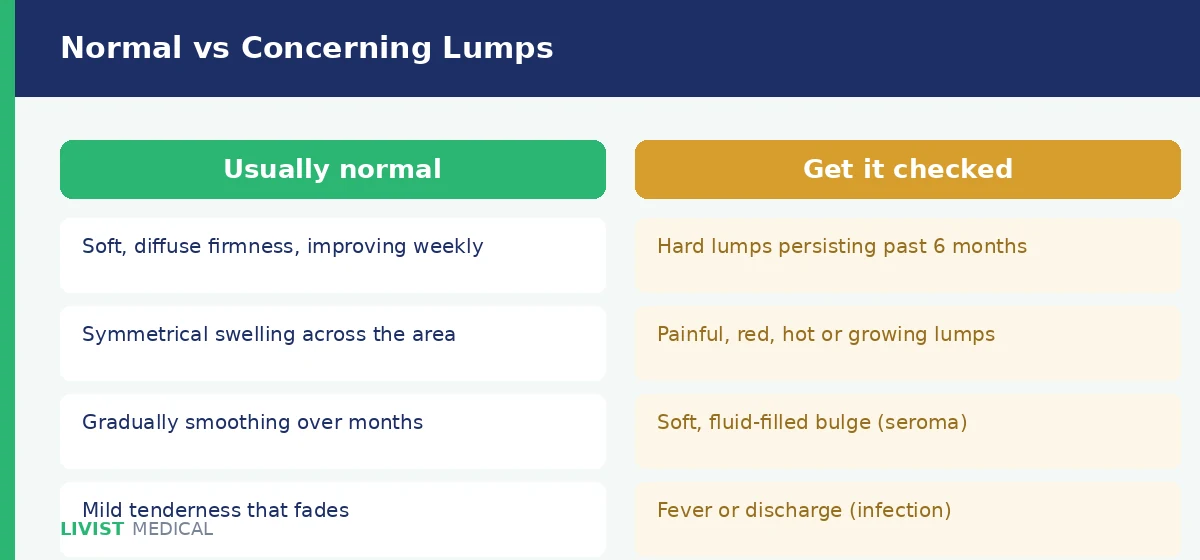
| Soft, diffuse firmness that's improving weekly | Hard lumps that persist beyond 6 months |
| Symmetrical swelling across the treated area | Painful, red, hot, or rapidly growing lumps |
| Gradually smoothing over weeks to months | A soft, fluid-filled bulge (possible seroma) |
| Mild tenderness that fades | Fever or discharge (possible infection) |
If your lumps match the right-hand column, contact your surgeon for assessment rather than waiting.

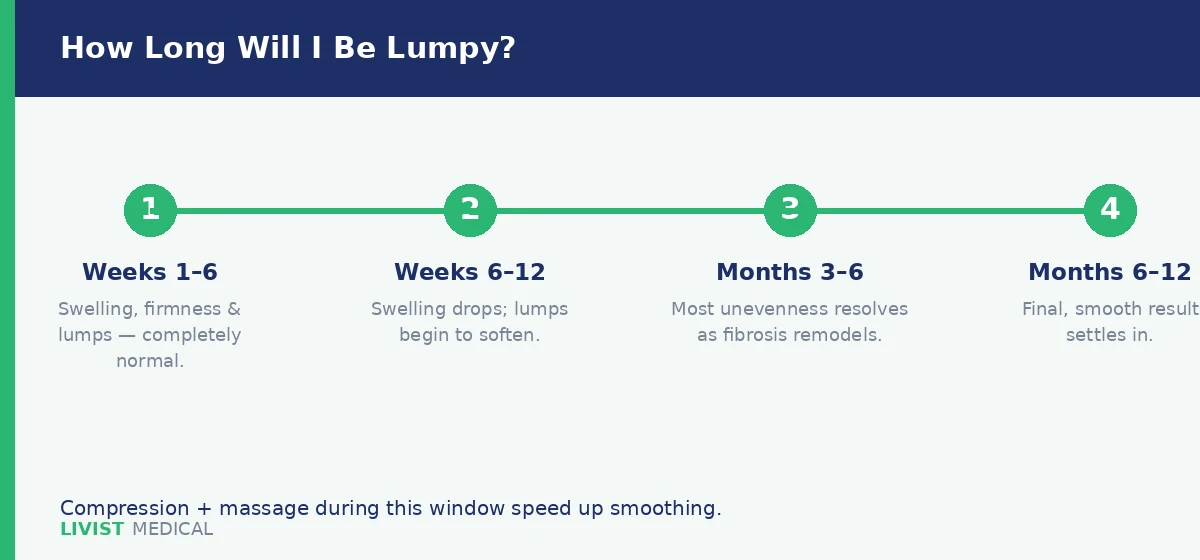
Recovery varies by person and how much fat was removed, but a typical timeline is:
Consistent compression and massage during this window make a real difference to how quickly it smooths out.

Most lumps resolve on their own, but these methods speed smoothing and treat stubborn areas:
| Method | How it helps |
|---|---|
| Compression garment | Reduces swelling and helps skin re-drape evenly |
| Lymphatic drainage massage | Moves fluid out and softens early fibrosis |
| Manual/scar massage | Breaks down firm fibrotic tissue over time |
| Radiofrequency or ultrasound therapy | Clinic treatments that soften fibrosis |
| Steroid (e.g., Kenalog) injections | For persistent, firm fibrotic lumps |
| Seroma aspiration | Draining a confirmed fluid pocket |
| Revision liposuction or fat grafting | Corrects true contour irregularities after 6–12 months |
Never aggressively self-treat a painful or fluid-filled lump — have it assessed first.
You can lower the risk of significant lumpiness by:
Book a check-up if you notice hard lumps that aren't improving after several months, a soft fluid-filled bulge, pain that's worsening, redness or warmth, fever, or any discharge. These can signal a seroma, infection, or fibrosis that benefits from treatment — all very manageable when caught early.
If you're unhappy with a lumpy or uneven result — or planning liposuction and want to minimise the risk — Livist Medical's body-contouring team can help. Procedures are led by Op. Dr. Azer Zeynalov, a plastic surgeon with 15+ years of experience who specialises in body contouring, Vaser and high-definition liposuction, and revision surgery for smooth, natural results. Explore body contouring and tummy procedures, or book a free consultation to have your case assessed.
A lumpy stomach after liposuction is almost always a normal, temporary stage of healing that smooths out within 3–6 months with compression and massage. Knowing the difference between normal firmness and a genuine problem — and acting early when something seems off — is what protects your final result.
If your lumps are persistent, painful, or worrying you, book a consultation with Livist Medical for an expert assessment and a clear plan.
Medically reviewed by the Livist Medical Team. This article is for general information and is not a substitute for a personal medical consultation.
Related articles: Nefertiti Neck Lift: Cost, Results & What to Expect, Lipo 360 Recovery Time: Week-by-Week Timeline & What to Expect (2026), How to Tighten Loose Skin After Weight Loss, How to Get Rid of a Double Chin: 9 Proven Methods (2026 Guide), Mommy Makeover Cost: Mexico vs Turkey vs USA (2026 Guide).
Plastic SurgeryKris Jenner before and after, decade by decade: what she has confirmed, what surgeons only speculate, and what a deep plane facelift really involves.
Plastic SurgeryMatt Rife before and after: what the photos show about his teeth and jaw, what he has actually said, and what puberty alone can explain.
Plastic SurgeryHow much does a breast reduction cost in 2026? Compare surgeon-fee vs all-in prices across Turkey, Germany, the UK and the US — with sources.