 Dentistry
4
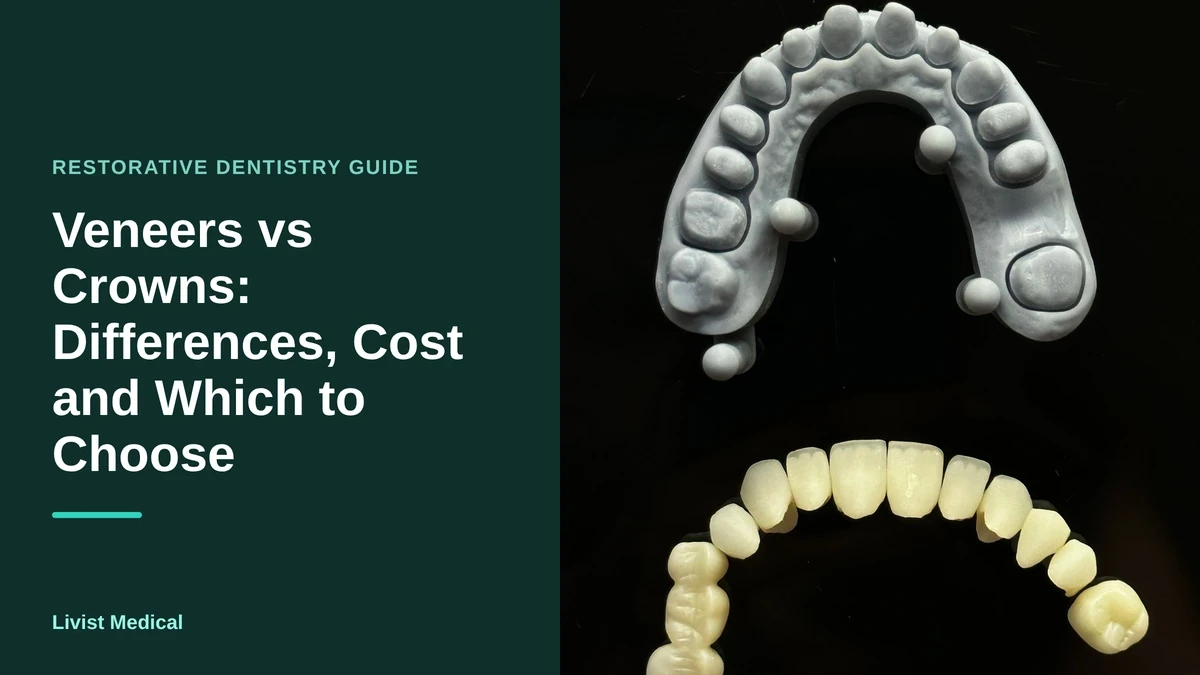
Veneers vs Crowns: Differences, Cost and Which to ChooseVeneers vs crowns: coverage, how much tooth is removed, lifespan and cost in the US and Turkey, plus when each one is the right choice for your teeth.
October 24, 2026Read More
Do fillings hurt without an injection? Shallow enamel cavities often don't; deeper ones do. Needle-free numbing, kids' options and 2026 filling costs.
Do fillings hurt without an injection? It depends on how deep the cavity is. Decay that stays in the outer enamel can often be filled with no injection, because enamel has no nerves; you feel pressure, vibration or cold. Once decay reaches the dentin or comes close to the nerve, drilling without numbing can cause sharp pain, so most dentists numb the tooth.
Written and medically reviewed by Prof. Dr. Funda Öztürk Bozkurt — restorative and aesthetic dentistry · Last updated: 25 October 2026
Quick summary:
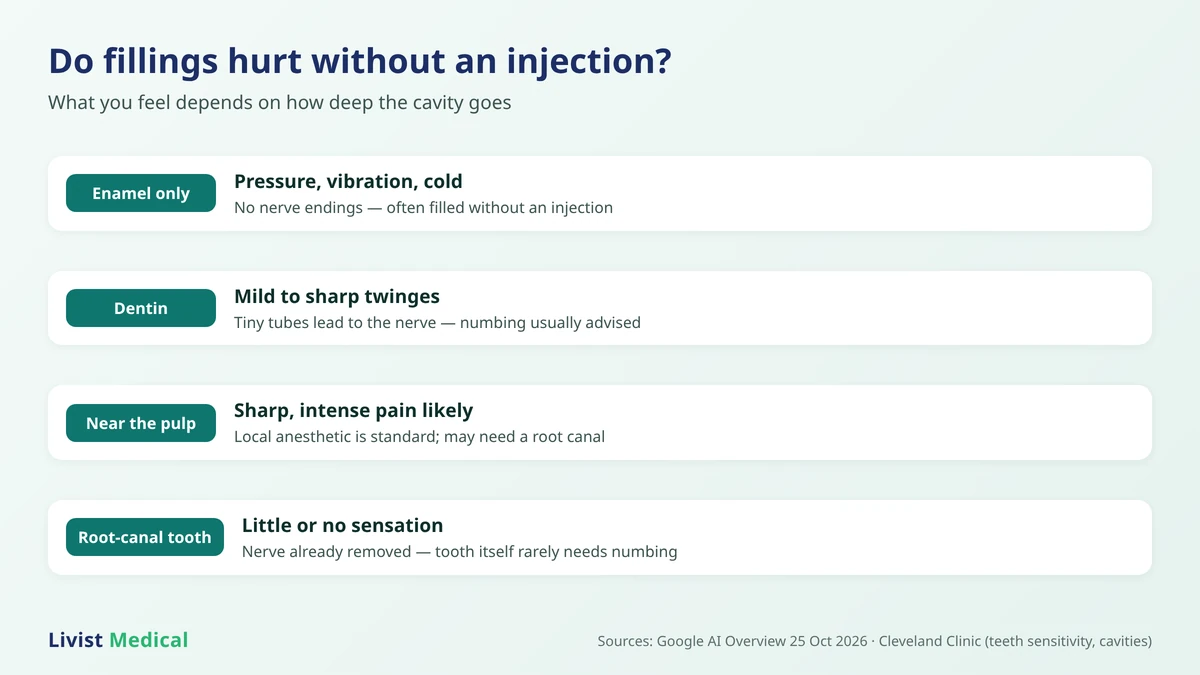
A tooth has three layers, and how much a filling hurts without an injection depends on which layer the decay has reached. Cleveland Clinic explains that dentin has tiny tubes that lead to the center of your tooth, where the nerve lives.
That is why the same drill can feel like nothing on one tooth and like a jolt on another.
| Cavity depth | What a filling feels like without an injection | Is numbing usually needed? |
|---|---|---|
| Enamel only (shallow, early cavity) | Pressure, vibration, a cold spray or mild discomfort; enamel has no nerve endings | Often not — a small enamel filling may be done without an injection |
| Dentin (medium cavity) | Mild to sharp twinges, especially with heat, cold or the drill, because dentin tubules connect to the nerve | Usually yes, or at least numbing gel and the option to stop for an injection |
| Near or into the pulp (deep cavity) | Sharp, intense pain is likely; a cavity that reaches the pulp often already hurts | Yes — local anesthetic is standard, and some teeth need a root canal instead |
| Tooth already treated with a root canal | Little or no sensation from the tooth itself, because the nerve has been removed | Often not for the tooth; the gum may still be numbed |
Source: depth categories as shown in Google's AI Overview for "do fillings hurt without an injection" on 25 October 2026, checked against Cleveland Clinic's pages on tooth sensitivity and cavities.
Cleveland Clinic notes that Your tooth starts to hurt when cavities reach the tooth pulp.
At that stage, drilling without an injection presses on tissue that is already inflamed. Dentists rarely offer a no-injection filling here, and a deep cavity may need a root canal treatment rather than a simple filling.
Drilling for a filling hurts without anesthesia only once the bur reaches sensitive tissue. In enamel the drill causes noise, vibration and sometimes warmth. In dentin it can trigger short, sharp pain, because the fluid in the dentin tubules moves and signals the nerve. Cleveland Clinic also notes that decay spreads faster in dentin because it is softer than enamel, so a cavity that was shallow a year ago may be deeper today.
Yes, a small cavity can often be filled without an injection when the decay is limited to the enamel. Your dentist decides from the X-ray, how deep the cavity looks and whether the tooth is already sensitive to cold or sweets. If you prefer to try without numbing, agree on a stop signal: you raise a hand, the dentist stops, and numbing is given before continuing.
Cleveland Clinic's advice applies whichever way you start: if you feel discomfort, let your dentist know so they can give you more numbing medication.
These signs may point to a deeper cavity; your dentist confirms with an exam and X-ray.
Yes, a dentist can numb part of your mouth without a needle, although the options depend on the tooth. The best-studied is a nasal spray for upper teeth. In a phase 3 trial published in the Journal of the American Dental Association (Ciancio et al., 2016), a spray of 3% tetracaine and 0.05% oxymetazoline let 84.1% of 44 patients complete a filling on upper teeth from premolar to premolar without a rescue injection, against 27.3% with placebo. Side effects included a runny nose and congestion that cleared within two hours, and a temporary rise in blood pressure.
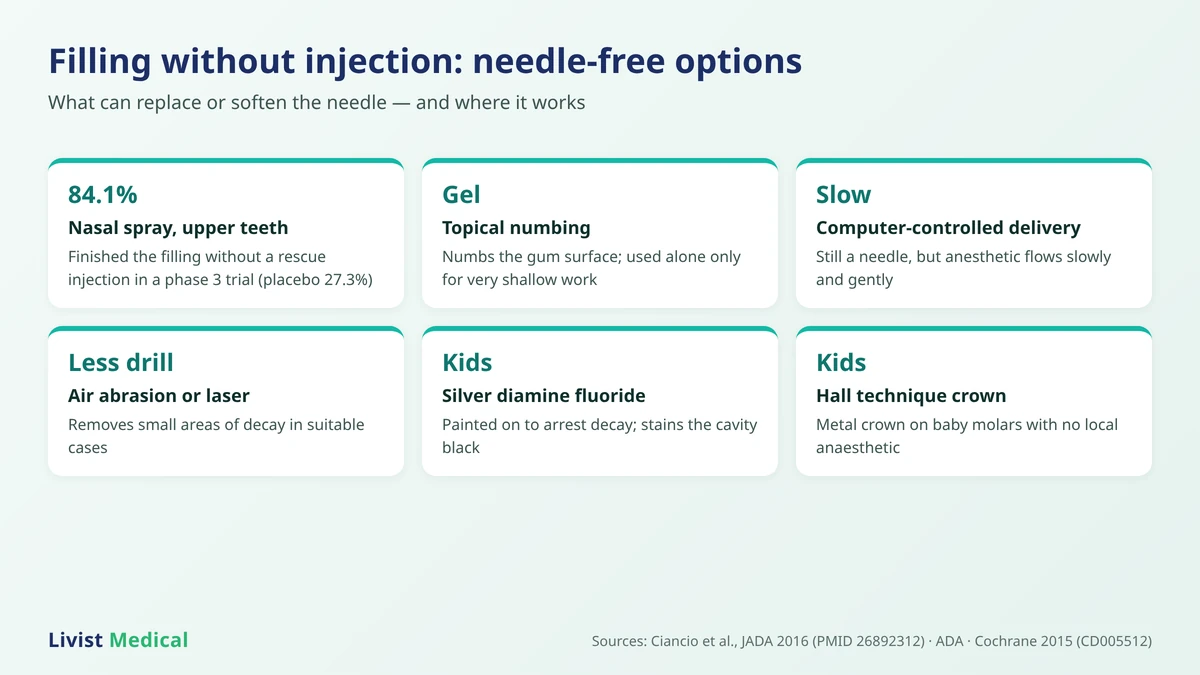
Children have more no-injection options than adults, because baby teeth are treated differently. Two are well documented:
noninvasive method of caries arrest, cleared by the FDA as a Class II device for tooth sensitivity, with use on cavities being off-label. The trade-off is permanent black staining of the decayed area.
with no local anaesthetic, carious tissue removal or tooth preparationand caused less discomfort at the appointment than fillings, though the five included studies had a high risk of bias.
For larger cavities in permanent teeth, children are usually numbed like adults. See our pediatric dentistry page for how treatment is planned for kids.
Without numbing, a shallow filling feels like firm pressure, a buzzing vibration and cold water spray. With numbing, you feel a pinch from the injection, then pressure only. Afterwards, Cleveland Clinic says it's normal to experience minor teeth sensitivity and gum soreness
, and these effects should go away in a week or two.
A direct tooth-coloured filling is done in one visit.
If your bite feels high or the tooth still hurts after two weeks, go back to your dentist: the filling may need adjusting, or the decay was deeper than it looked.
Anesthesia is not always necessary for fillings, but it is the default. Cleveland Clinic states that a filling should not hurt because your dentist will use local anesthesia to numb the area.
Skipping it is reasonable for small enamel cavities if you and your dentist agree, and if you can ask for numbing at any point.
For a whole-smile plan rather than a single filling, compare composite bonding, veneers vs crowns and our guide to perfect teeth.
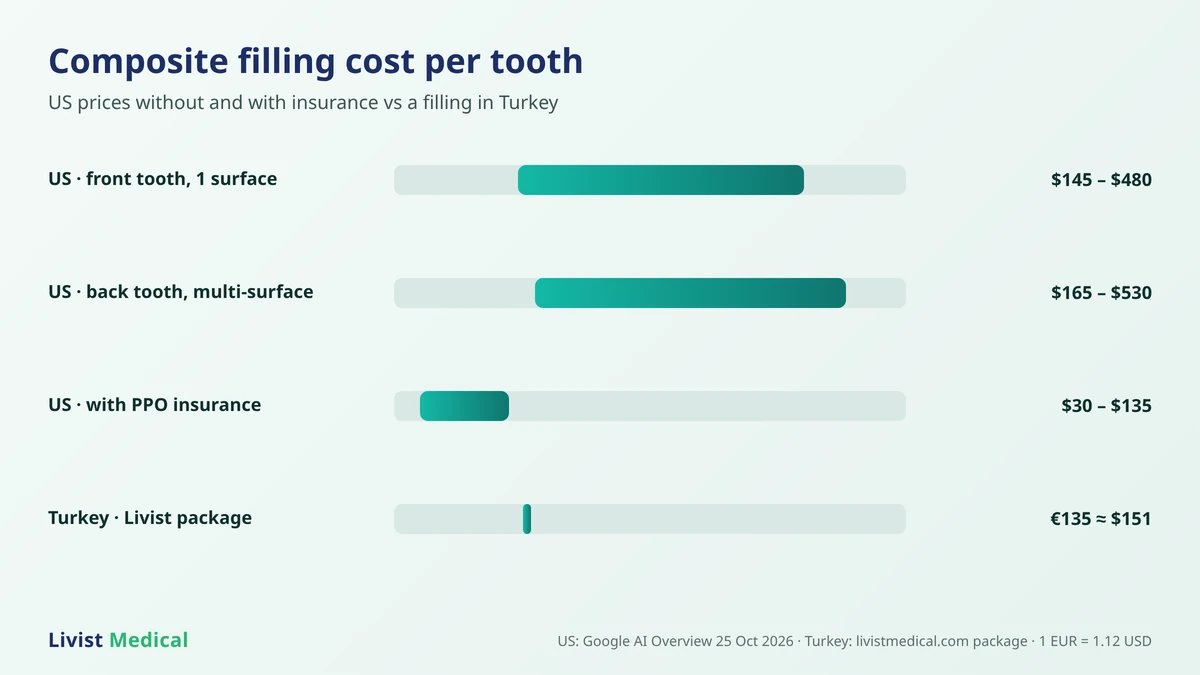
A tooth-coloured composite filling costs $150 to $530 per tooth in the US without insurance, with most patients paying $170 to $440. Prices rise for back teeth and fillings that cover more than one surface.
| Composite filling | Cost per tooth |
|---|---|
| US, front tooth, single surface (no insurance) | $145 – $480 |
| US, back tooth, multi-surface (no insurance) | $165 – $530 |
| US, with PPO insurance (70–80% covered) | $30 – $135 out of pocket |
| Turkey, Livist composite filling package | €135 (about $151) |
US prices: Google's AI Overview for "composite filling cost", 25 October 2026. Turkey price: the live composite dental filling package, converted at 1 EUR = 1.12 USD on 25 October 2026. A single filling rarely justifies a trip; patients usually combine fillings with larger work such as same-day dental implants or veneers.
When a cavity is too large for a filling and the tooth needs a crown instead, CEREC same-day crowns can be designed, milled and fitted in a single visit.
Send a recent X-ray or clear photos of the tooth, and tell us whether you would rather try a filling without an injection. A dentist at one of our contracted healthcare institutions holding a health tourism authorization certificate will say whether that is realistic for your cavity, and Livist Medical arranges the appointment, transfers and accommodation.
Request your free dental filling consultation.
Sources: Cleveland Clinic — Dental Fillings; Teeth Sensitivity; Cavities. Ciancio SG et al. Comparison of 3 intranasal mists for anesthetizing maxillary teeth in adults: a randomized, double-masked, multicenter phase 3 clinical trial. J Am Dent Assoc. 2016;147(5):339-347 (PMID 26892312). American Dental Association — Silver Diamine Fluoride. Innes NPT et al. Preformed crowns for decayed primary molar teeth. Cochrane Database Syst Rev. 2015 (CD005512).
DentistryVeneers vs crowns: coverage, how much tooth is removed, lifespan and cost in the US and Turkey, plus when each one is the right choice for your teeth.
 Dentistry
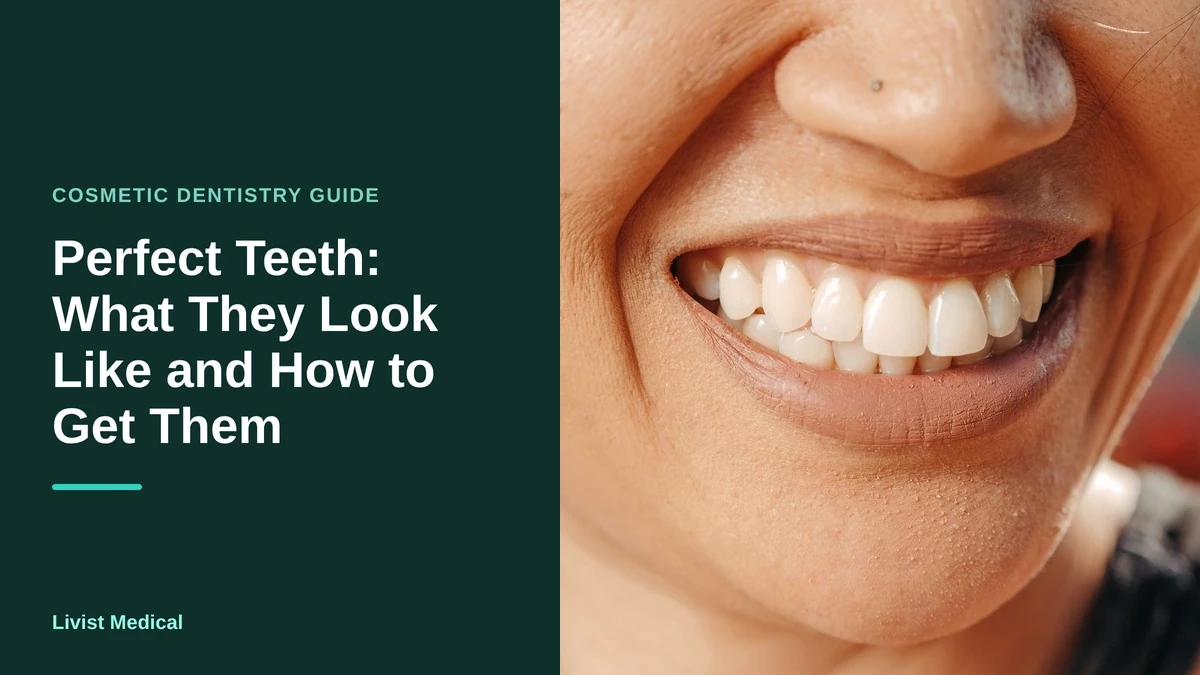
Perfect teeth explained: the 6 features dentists measure, how rare naturally straight teeth are, what people really notice, and how to get a perfect smile.
 Dentistry
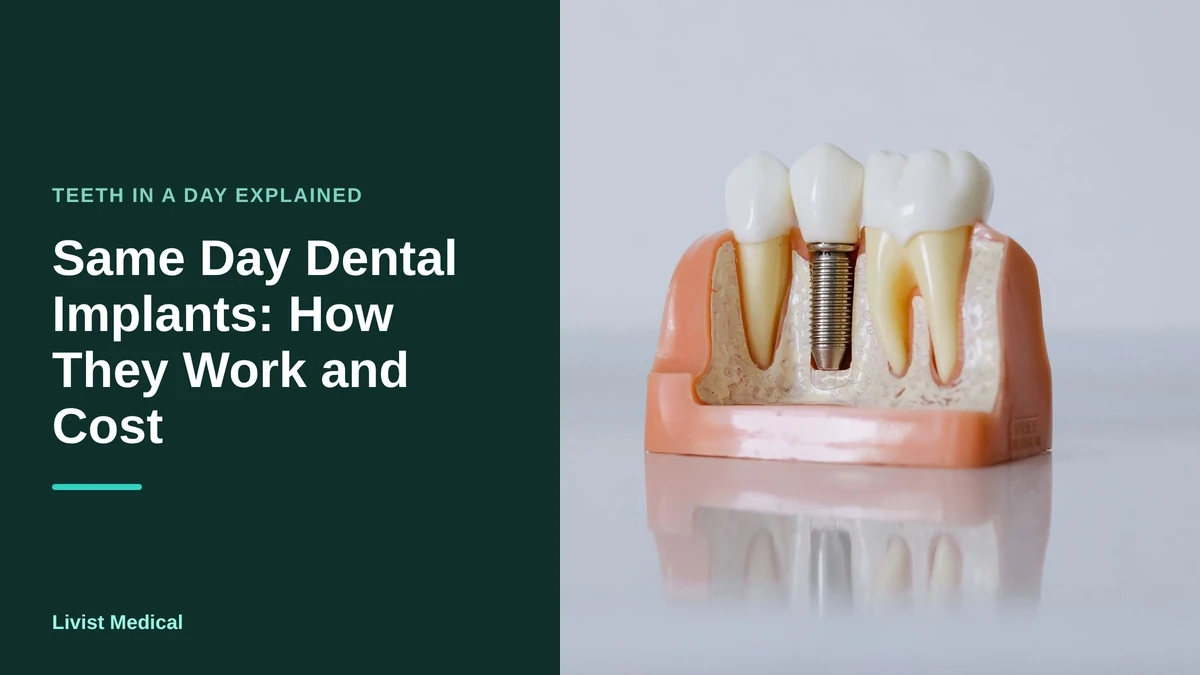
Same day dental implants place an implant and temporary tooth in one visit. Steps, who qualifies, success data, and costs in the US vs Turkey.