 Ophthalmology
Prof. Dr. Hanefi Çakır
43 years experience
Ophthalmologist specializing in cataract, laser vision correction, keratoconus and corneal transplant at Türkiye Hastanesi, Istanbul. 40+ years of experience.
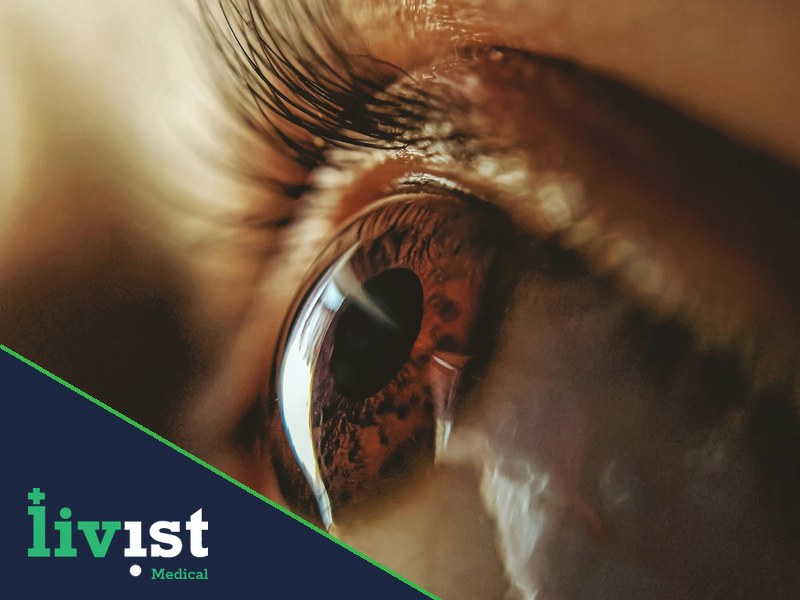
Corneal cross-linking (CXL) in Istanbul, Turkey from $1,100 for both eyes. The treatment used to slow or stop progressive keratoconus, with a 3-night stay.
Duration
About 60 minutes per eye
Days in Istanbul
3
Hospital Stay
Outpatient (same day)
Recovery
3–5 days of surface healing
Contracted Institutions
Contracted Doctors
Average Rating
Patient Reviews
Corneal cross-linking (CXL) is the main treatment to stop keratoconus from progressing. Riboflavin (vitamin B2) drops are applied to the cornea, which is then exposed to controlled ultraviolet light, creating new bonds between collagen fibres that strengthen the cornea. There are two approaches: epithelium-off, the most effective, and epithelium-on, with faster recovery. The goal is to halt deterioration rather than fully correct vision, and it can be combined with corneal rings or surface laser.
$1,100
Avg. rating
Self-pay prices for Corneal Cross-Linking for Keratoconus (both eyes) compared with Turkey, 2026
$5,000
$5,200
Current Livist prices at contracted institutions in Istanbul. The final price is confirmed after the doctor's evaluation.
| Type or technique | Best suited for | Price in Turkey |
|---|---|---|
| Standard cross-linking | Halting keratoconus progression | $1,100 |
| Accelerated cross-linking | Faster recovery | $1,200 |
| Cross-linking with Intacs | Moderate keratoconus | $2,400 |
From your first consultation to your flight home
Share topography reports so the doctor can assess progression.
Topography and corneal thickness to confirm suitability.
Numbing drops, no pain.
Vitamin B2 drops for about 20–30 minutes.
UV light for 10–30 minutes, then a bandage lens.
Check at 3–5 days to remove the lens.
Share topography reports so the doctor can assess progression.
Topography and corneal thickness to confirm suitability.
Numbing drops, no pain.
Vitamin B2 drops for about 20–30 minutes.
UV light for 10–30 minutes, then a bandage lens.
Check at 3–5 days to remove the lens.
What sets Corneal Cross-Linking for Keratoconus apart at Livist Medical
Protects your vision.
When treated early.
No incisions.
Usually one session.
With rings or laser.
In corneal shape for some patients.
An educational video from an independent medical source explaining Corneal Cross-Linking, not from the treating provider.
OphthalmologyOphthalmologist specializing in cataract, laser vision correction, keratoconus and corneal transplant at Türkiye Hastanesi, Istanbul. 40+ years of experience.
 Ophthalmology
Ophthalmologist with a focus on retina and vitreous diseases at Türkiye Hastanesi, Istanbul. 30+ years since specialty training.
 Ophthalmology
Specialist in ophthalmology at Medipol Mega University and Medipol Acıbadem Hospital, Istanbul. 20+ years of experience.
 Ophthalmology
Specialist in ophthalmology and vitreoretinal surgery at Medipol Mega University Hospital, Istanbul. 25+ years of experience.
 Ophthalmology
Specialist in ophthalmology and vitreoretinal surgery at Medipol Mega University Hospital, Istanbul. 25+ years of experience.
Typical schedule and after-care plan in Istanbul.
Burning, watering and light sensitivity; drops and painkillers.
Surface heals; bandage lens removed.
Back to work; vision improves gradually.
Contact lenses again after approval.
Cornea stabilises.
Topography to confirm progression has stopped.
Possible side effects include temporary pain, corneal haze and rarely infection; it is not usually done on corneas thinner than 400 microns without a modified protocol.
No hidden fees, no surprises
$1,100
Everything you want to know about Corneal Cross-Linking for Keratoconus
Talk to a CoordinatorWith Livist it starts at $1,100 depending on the option that suits your case; the final price is set after the doctor reviews your reports.
Eye surgery in Turkey is performed in specialist ophthalmology hospitals with modern diagnostic and laser equipment. Safety depends on a full pre-operative eye examination and an experienced surgeon, which is how every Livist Medical case is arranged.
Usually after the bandage lens is removed at day 3–5.
Its main aim is to stop progression; mild improvement is possible but glasses or lenses are often still needed.
Epi-off removes the surface and is more effective with slower recovery; epi-on is faster to recover but less effective.
Patients with progressive or at-risk keratoconus and enough corneal thickness.
No pain during treatment; discomfort for 2–3 days afterwards.
One session usually suffices; it is rarely repeated if progression continues.
Yes, together they stop progression and improve corneal shape.
After about a month.
Usually from the teens to the thirties, when progression is fastest.
Temporary pain, haze and rarely infection or scarring.
 Ophthalmology
 Ophthalmology
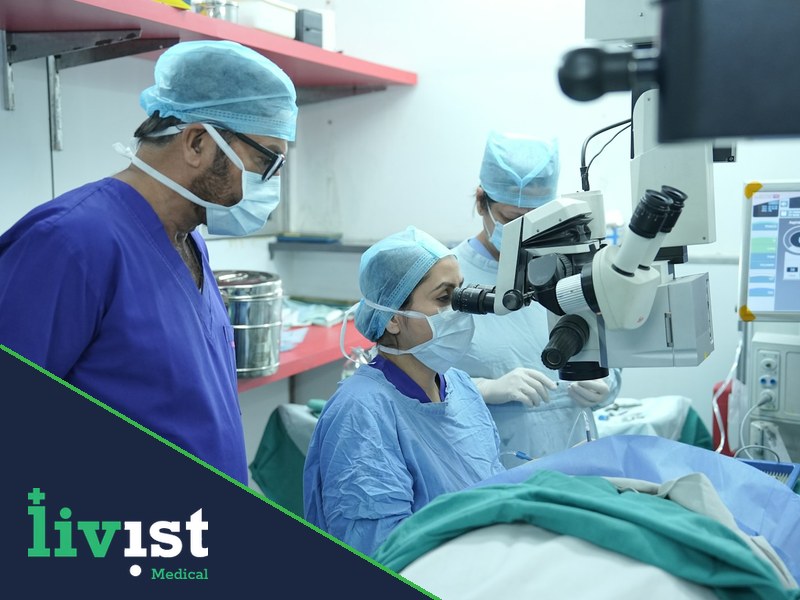 Ophthalmology
 Ophthalmology
Our team is ready to help
Get in Touch
Free consultation