 Plastic Surgery
5
Plus Size Mommy Makeover: BMI, Risks & Realistic ResultsPlus size mommy makeover: the BMI surgeons accept, how risk rises with BMI, staged plans, surgery after weight loss and realistic results.
October 3, 2026Read More
Why week 3 often feels like a step backwards — and what is actually normal
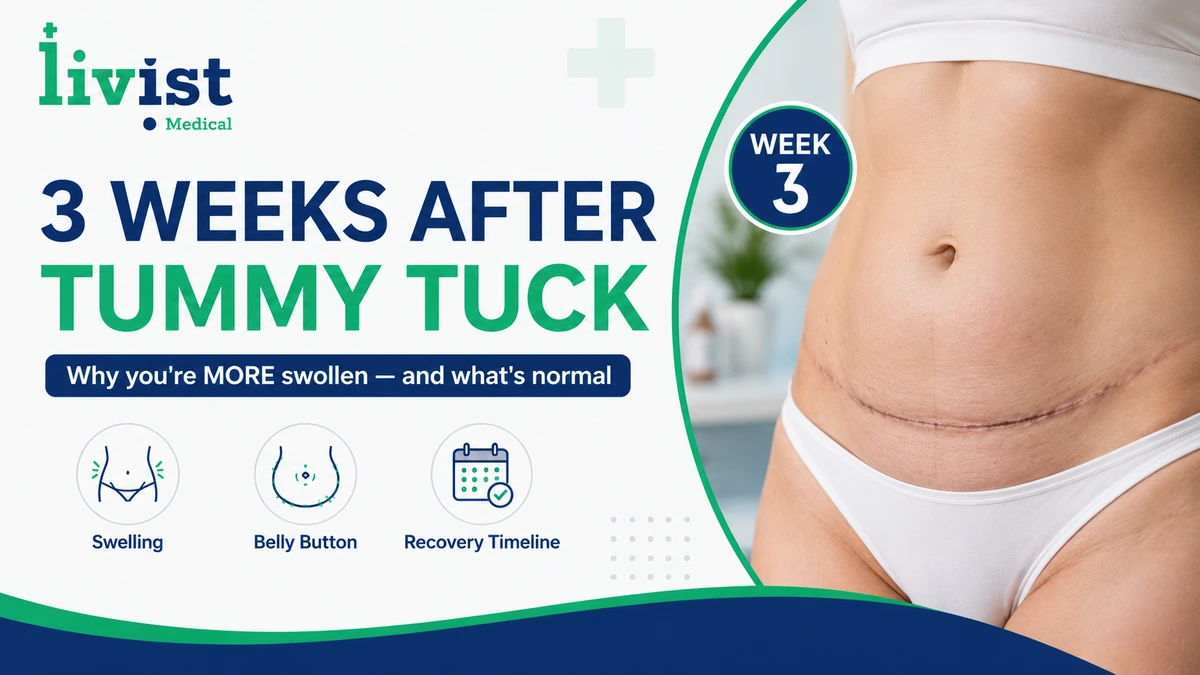
Three weeks after a tummy tuck, most patients can stand fully upright, have stopped strong pain medication, and are back to light daily activity. But swelling is often worse than it was at week two, the abdomen may look rounded rather than flat, and the belly button can look strange. All of this is normal — and week 3 is the stage where patients most often panic.
This guide covers what week 3 actually looks like, why it frequently feels like a setback, and the one thing international patients need to plan for: whether it is safe to fly home.
At three weeks post-op, the hardest part of recovery is behind you. Expect to walk upright, sleep more comfortably, and manage daily tasks alone. Expect also to still have moderate swelling, a firm and slightly raised incision line, numbness above the scar, and an abdomen that looks fuller than you hoped. You are roughly 20% of the way to a final result.
That last point is the one to hold onto. Week 3 is early. What you see now is not what you are buying.
| Stage | Typical experience | Swelling remaining |
|---|---|---|
| Week 1 | Bent posture, drains often in place, significant discomfort, rest dominates | Peak |
| Week 2 | Drains usually out, walking more, swelling briefly improves | High |
| Week 3 | Upright, off strong pain relief, light activity — swelling often rebounds | High again |
| Weeks 4–6 | Light work resumed, most restrictions lifting, swelling begins a real decline | Moderate |
| Weeks 6–12 | Core exercise gradually reintroduced with clearance, shape emerges | Mild to moderate |
| 3–6 months | Contour close to final; scar starts fading from red to pink | Mild, evening-only |
| 6–12 months | Final contour; scar continues maturing to pale | Resolved |
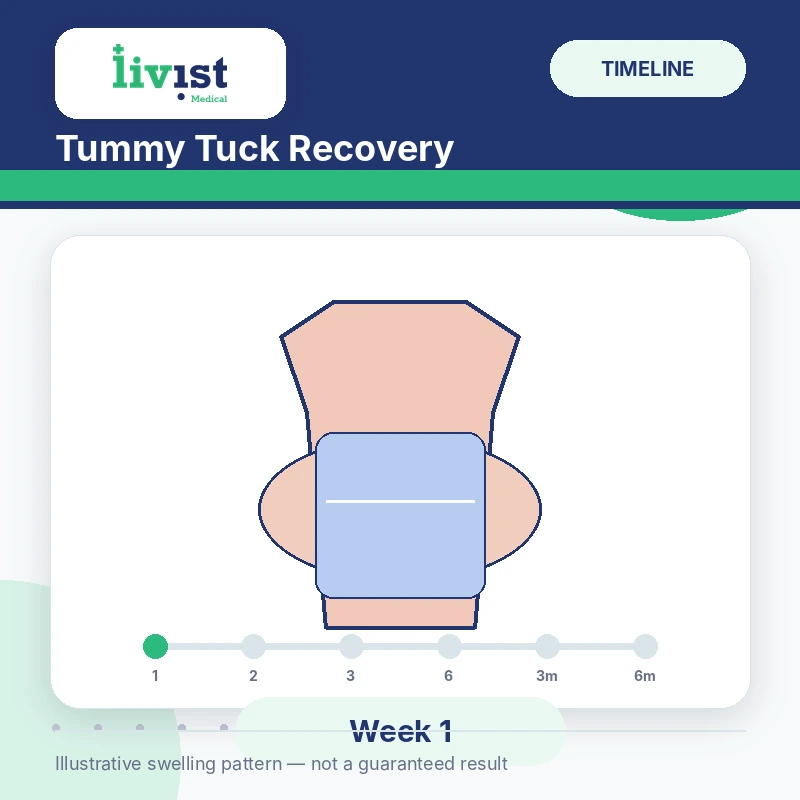
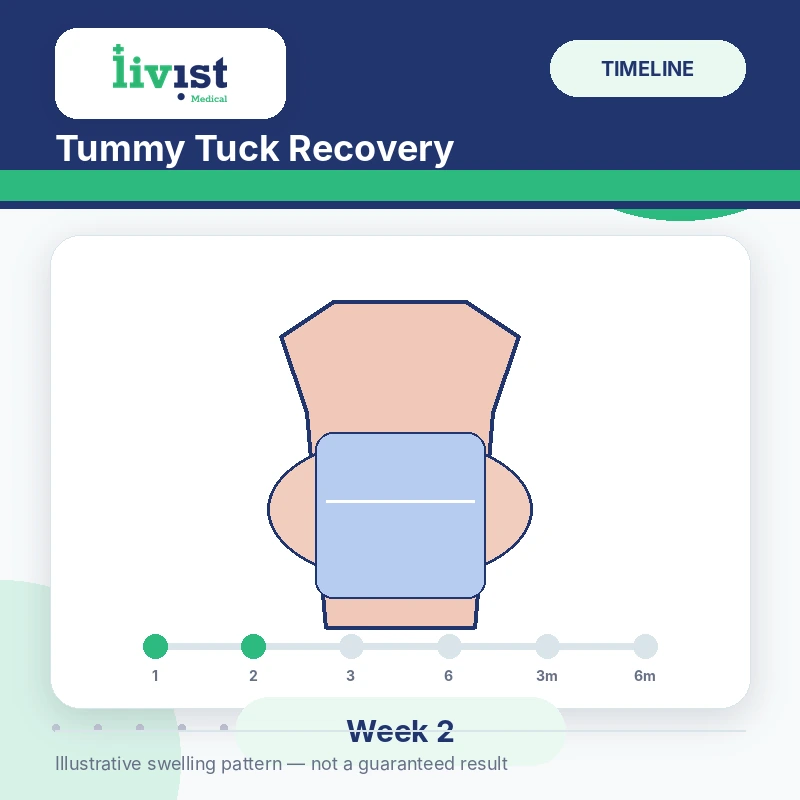
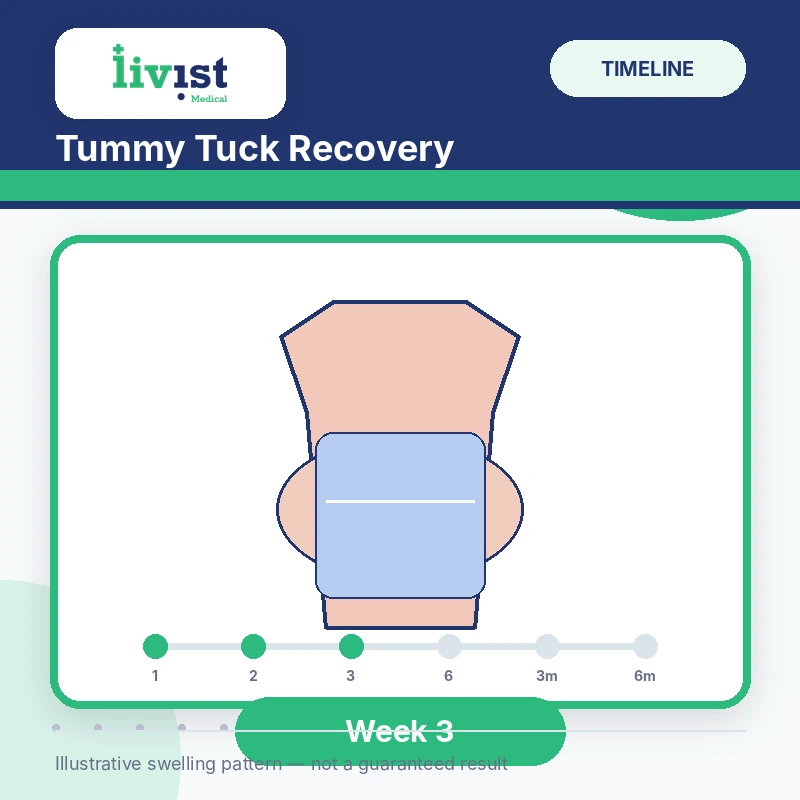
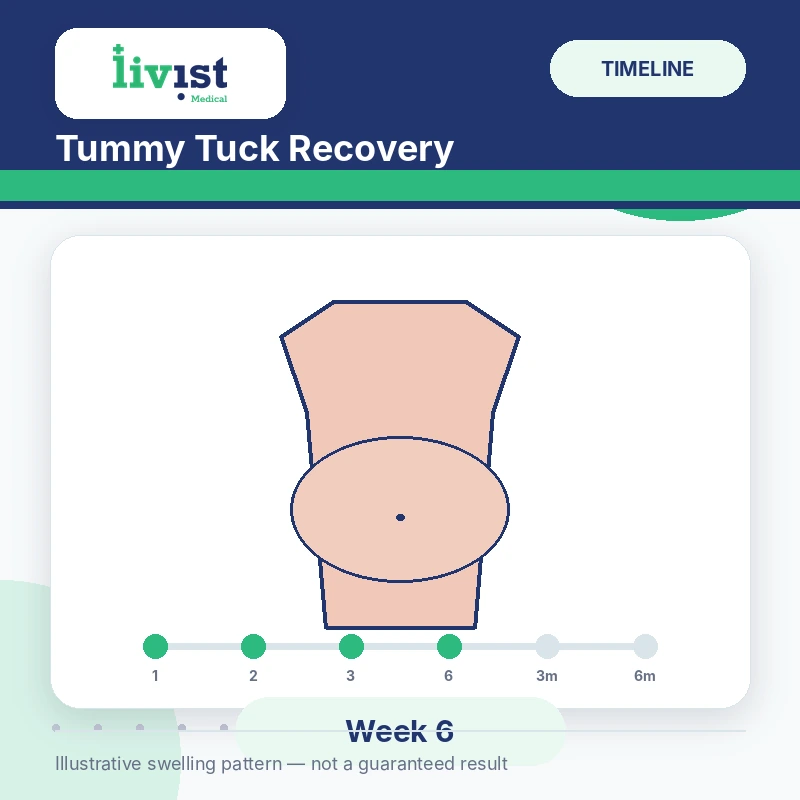
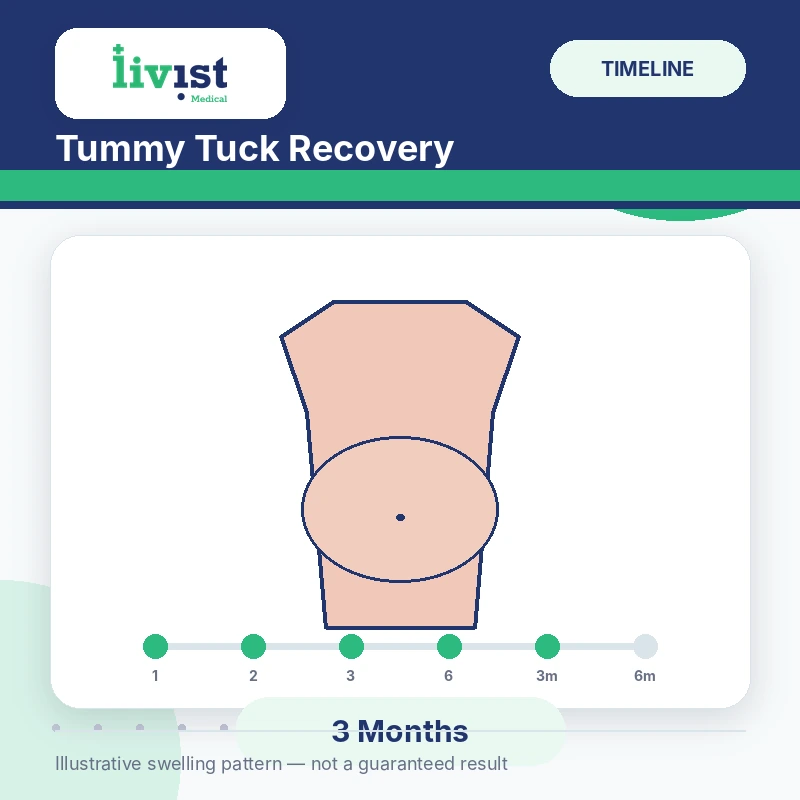
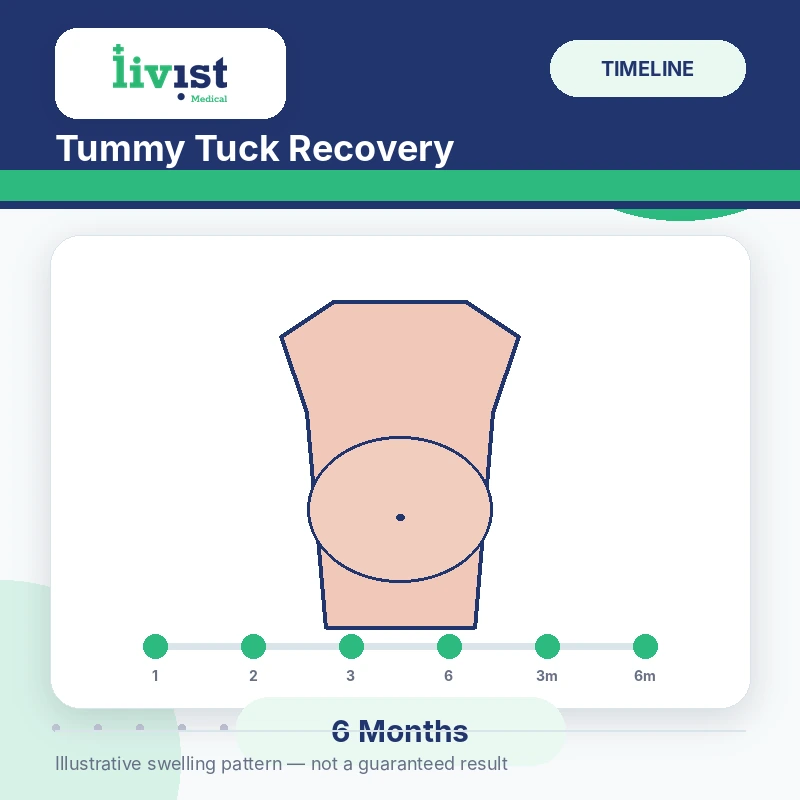
Note the shape of that table. Week 2 improves, week 3 often regresses, and only from week 4 does the trend turn reliably downward. Patients who do not know this read week 3 as failure.
If your tummy tuck was part of a mommy makeover, the breast and liposuction results settle on their own timeline — see mommy makeover before and after: results timeline.
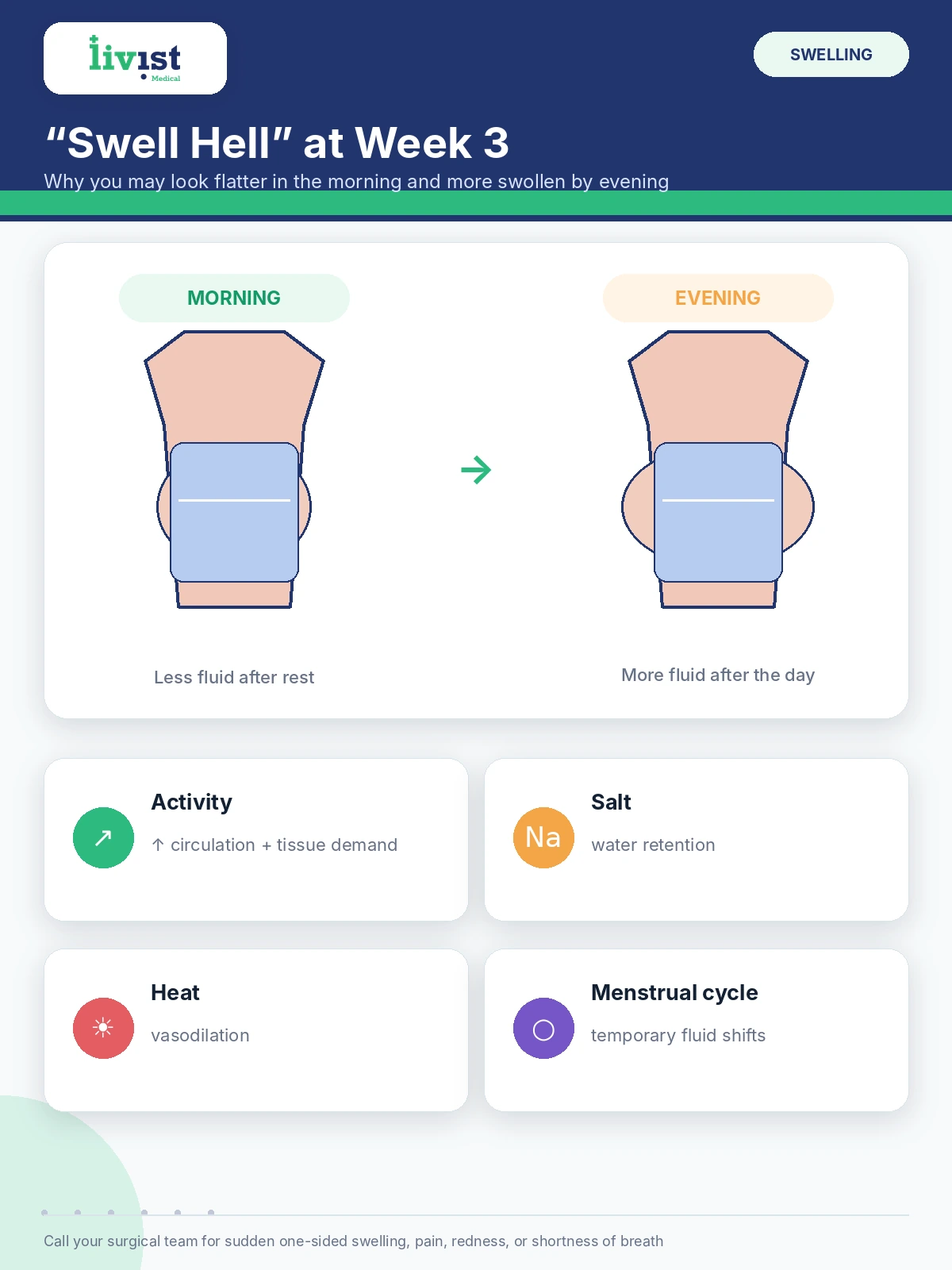
Increased swelling at week 3 is usually caused by returning to activity. As you move more, blood flow to the healing tissue rises — while the lymphatic vessels that normally drain fluid were cut during surgery and have not yet rebuilt. More fluid arrives than can leave, so it accumulates.
This is common enough that patients have a name for it.
The term describes the period from roughly week 3 to month 3 when swelling fluctuates unpredictably. Its signature pattern: you wake up flat, and by evening you look pregnant. It responds to activity, salt, heat, hormones and your menstrual cycle. It is frustrating, it is normal, and it is temporary — lymphatic drainage pathways typically re-establish over about three months.
What helps: consistent compression garment use, hydration, reduced salt, short frequent walks rather than one long walk, elevating the legs when resting, and manual lymphatic drainage massage if your surgeon approves it.
The distinction matters, because one is normal and one needs treatment.
Seroma is one of the most common tummy tuck complications and is straightforward to treat: your surgeon drains it with a needle, sometimes more than once. It is not an emergency, but it should not be ignored — left alone, a persistent seroma can form a capsule and require a further procedure. If you have a localised bulge that does not settle overnight, send your surgeon a photo.
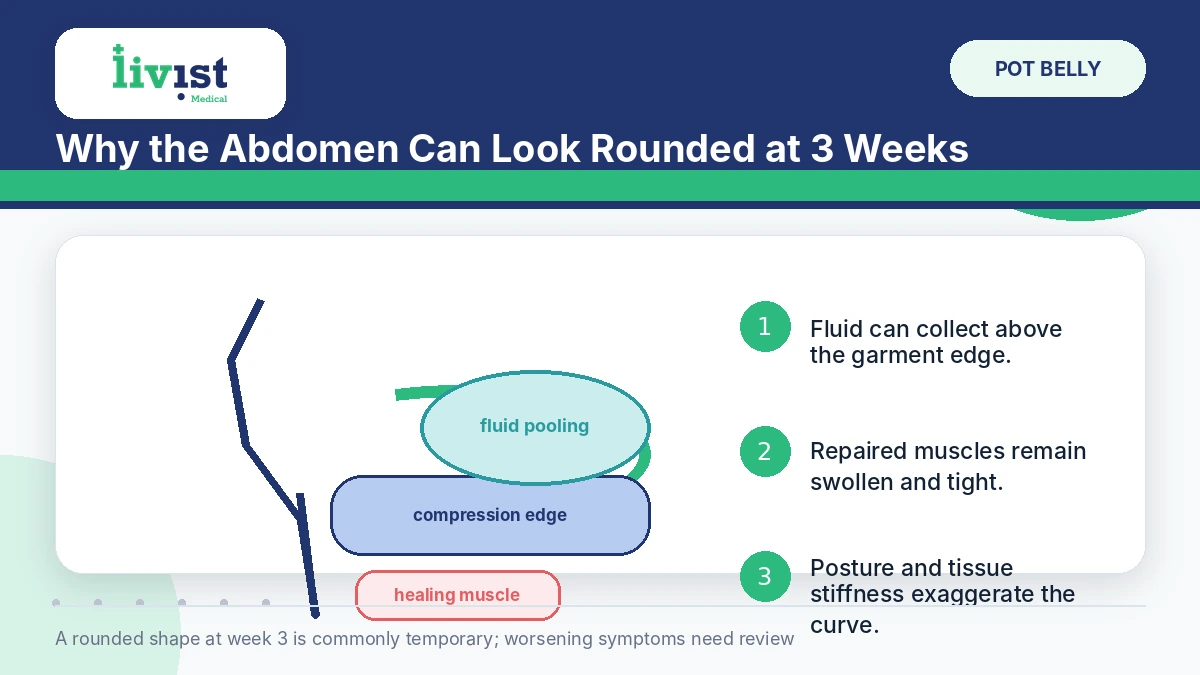
Many patients reach week 3, look in the mirror, and see a rounded upper abdomen sitting above a flat lower abdomen. It is a distressing look, and it has a mundane explanation.
Fluid drains downward with gravity and collects above the tightened lower abdomen and the compression garment's edge. Meanwhile the repaired muscle layer is still swollen and inflamed, and the tissue has not yet redraped over the new contour. The result is a temporary pot-bellied appearance that has nothing to do with your surgical result.
It typically resolves between weeks 6 and 12 as swelling declines and the tissue settles. Wearing your compression garment correctly — high enough that it does not create a tourniquet line pushing fluid upward — makes a visible difference. This is a good moment to remember that judging a tummy tuck at three weeks is like judging a cake as it comes out of the oven.
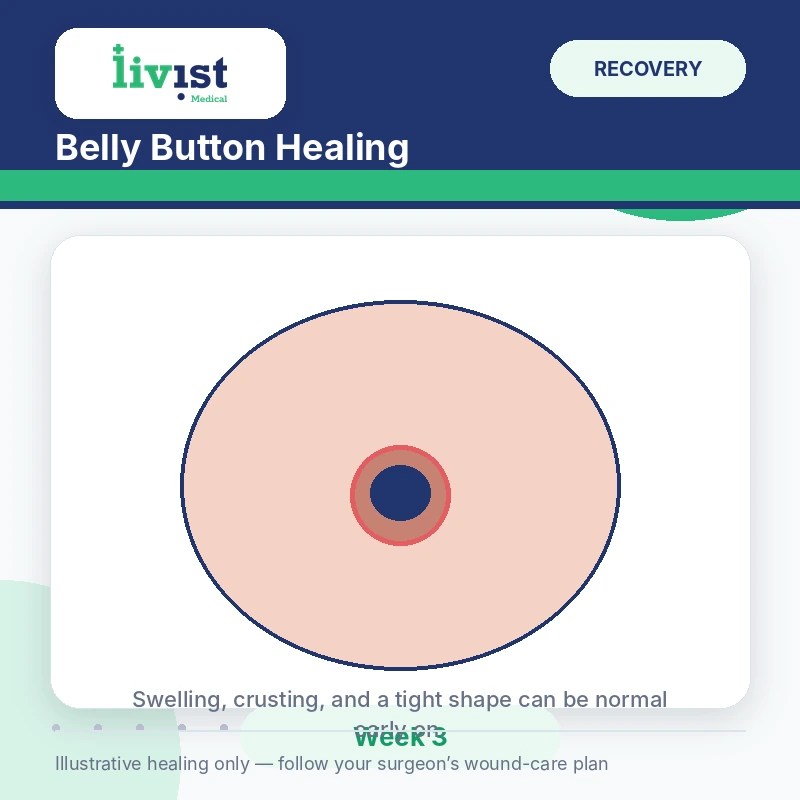
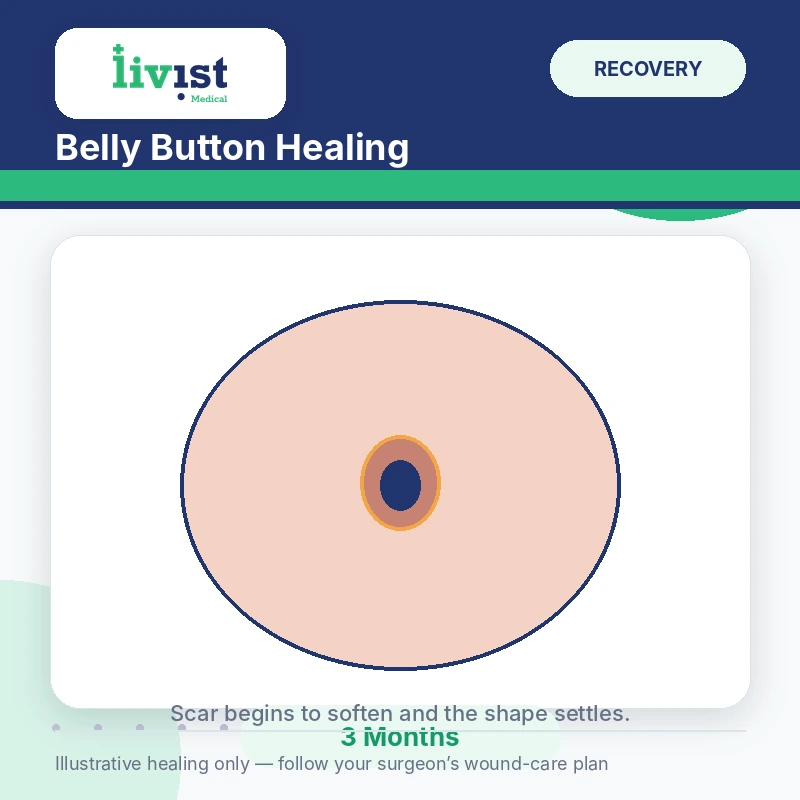
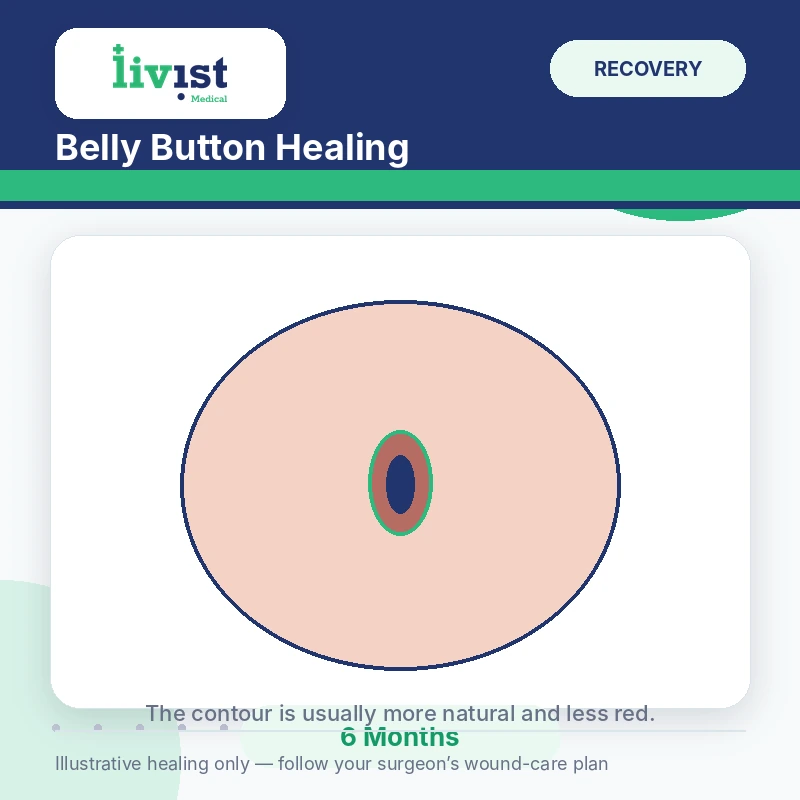
The belly button is often the last thing to look normal. At week 3, expect it to still be settling into its new position, with possible minor scabbing, redness, firmness, or a slightly odd shape. It may look too small, too round, or slightly off-centre. Most belly buttons take three to six months to look natural, and the surrounding scar continues to soften for a year.
The main incision at three weeks is typically closed, firm, raised and red or pink. This is normal scar maturation, not a problem — collagen is being laid down aggressively before it remodels. Numbness in the skin between the incision and the belly button is also expected and can persist for six to twelve months, occasionally longer.
Most surgeons start silicone scar gel or silicone sheeting around now, once the incision is fully closed with no scabs or open areas. Starting too early on an open wound is counterproductive, so follow your surgeon's timing rather than a generic schedule.
| Usually fine | Not yet |
|---|---|
| Walking, including longer flat walks | Lifting more than 5–10 lb (2–4.5 kg) |
| Light desk work or working from home | Any core exercise: sit-ups, planks, crunches |
| Showering normally | Baths, swimming pools, hot tubs, sea |
| Driving, if off narcotics and able to brake sharply | Running, jumping, HIIT, heavy cardio |
| Most normal eating | Straining, including constipation straining |
| Sleeping slightly flatter, if comfortable | Carrying children or shopping bags |
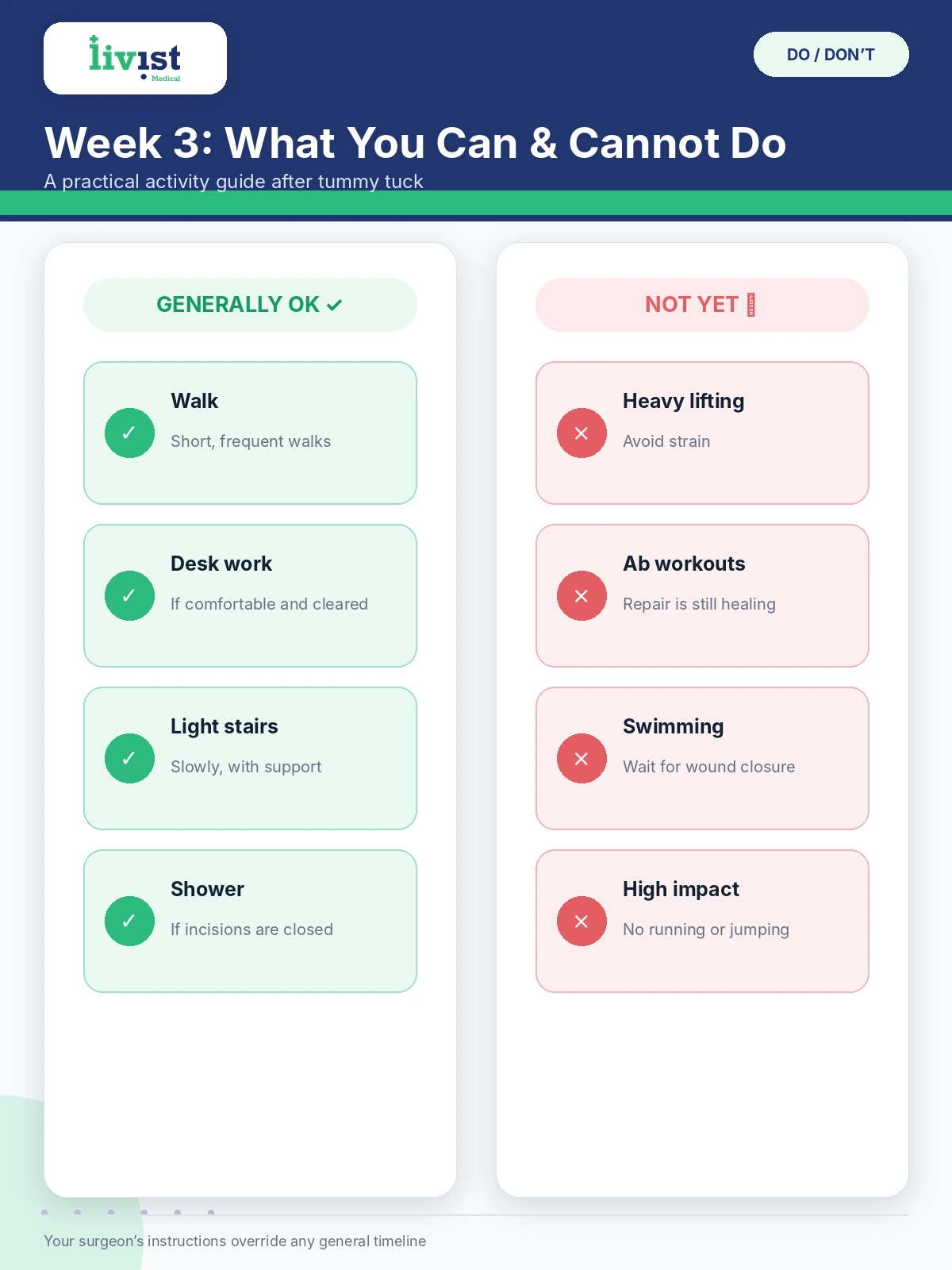
The restrictions exist to protect the muscle repair. The sutures holding your abdominal wall together are at their most vulnerable in the first six weeks, and a torn repair is not something that heals on its own. Restraint now is the cheapest insurance you will ever buy.
If your tummy tuck was part of a mommy makeover, the full week-by-week plan, including when you can drive and lift, is in mommy makeover recovery time: week-by-week timeline.
Most patients can stand fully upright by week 3, and many manage it by the end of week 2. If you still cannot straighten without significant pulling, that is worth reporting, but it is not automatically alarming — patients with a tighter muscle repair or a larger skin excision take longer.
Do not force it. Straighten gradually as the tissue allows. Continued hunching past week 3, however, causes its own problems: back and neck pain from posture, and occasionally a scar that heals under tension.
This section matters most to patients who travelled abroad for surgery, and it is the question most recovery guides ignore entirely.
Most surgeons consider flying safe from around two to three weeks after an abdominoplasty, and many international patients fly home at exactly this point. The concern is not the surgery itself — it is deep vein thrombosis (DVT). Abdominoplasty already carries one of the higher DVT risks in cosmetic surgery, and long-haul immobility compounds it.
If you are flying at three weeks, standard precautions are:
Expect swelling to worsen for several days after a flight. That is cabin pressure and immobility, not a complication.
At Livist Medical, tummy tuck patients are scheduled with this built in — the stay in Istanbul is planned around the surgeon's clearance for the return flight rather than around the cheapest ticket. If you had surgery elsewhere and are unsure about your travel plans, you can still talk to our team.
Most of week 3 is uneventful. These are the exceptions that need contact rather than reassurance:
Medically reviewed by the Livist Medical Team. This article is for general information only and does not replace your surgeon's instructions. Recovery varies between patients — always follow the specific guidance of the surgeon who performed your procedure, and seek urgent care for any warning signs listed above.
Plastic SurgeryPlus size mommy makeover: the BMI surgeons accept, how risk rises with BMI, staged plans, surgery after weight loss and realistic results.
 Plastic Surgery
Mommy makeover scars: where the tummy tuck, belly button, breast and liposuction scars sit, how they fade from week 1 to 2 years, and scar care.
 Plastic Surgery
Mommy makeover with BBL: can you combine them, why many surgeons stage them, fat embolism and clot risks, 360 options, cost and recovery.