 Plastic Surgery
10
Kris Jenner Before and After: The Full TimelineKris Jenner before and after, decade by decade: what she has confirmed, what surgeons only speculate, and what a deep plane facelift really involves.
August 19, 2026Read More
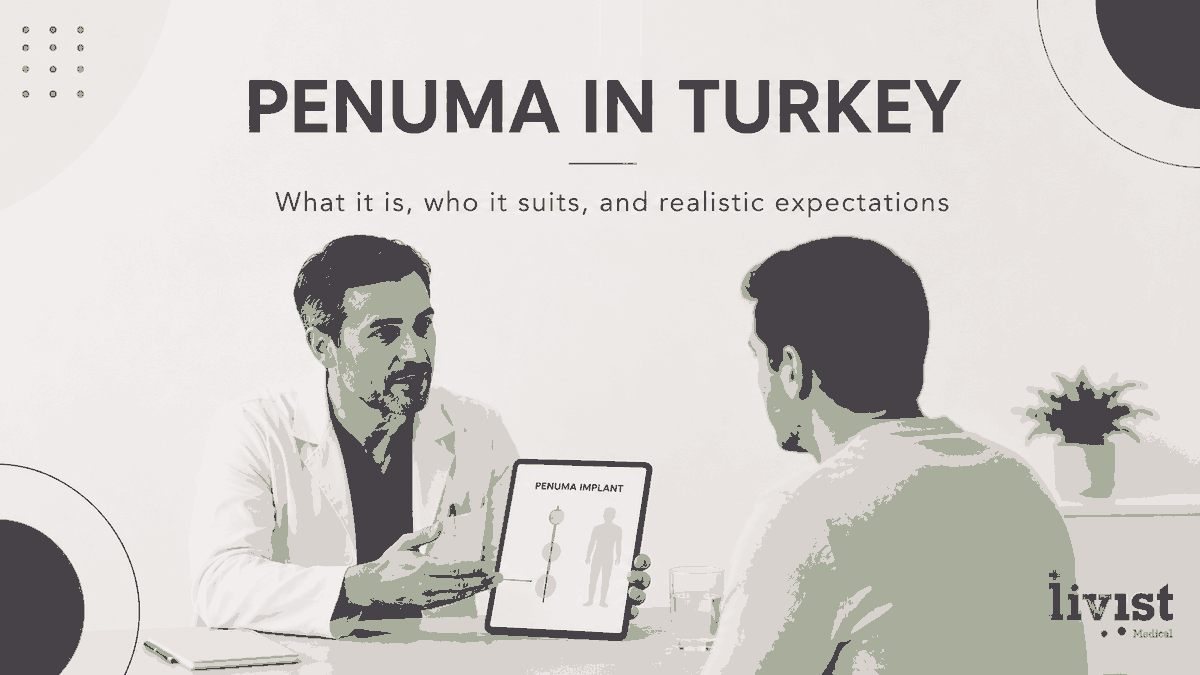
Penuma implant costs $16,000-$18,500 in the US. Real gains, 6-8 week recovery, and the 3-21% device removal rate clinics rarely mention. Honest 2026 guide.
The Penuma implant is a soft, custom-fit medical-grade silicone sleeve placed under the skin of the penis in an outpatient procedure. It is a purely cosmetic device: it increases flaccid girth and length, and it does not treat erectile dysfunction or improve sexual function. In the United States it typically costs between $16,000 and $18,500. This guide covers what it actually does, what the published outcome data shows including removal rates, and who should not have it.
Note: This article is informational and is not medical advice. Suitability for any surgical procedure can only be determined by a qualified surgeon after an in-person assessment.
Penuma is a crescent-shaped sleeve made of medical-grade silicone, shaped to sit under the penile skin along the shaft. It is sized to the individual during surgery and is intended as a permanent device, though it can be surgically removed.
The single most important distinction, and the one most often blurred in marketing: Penuma is a cosmetic implant, not a functional one. It is entirely different from an inflatable penile prosthesis used to treat erectile dysfunction. It does not create erections, does not improve erectile quality, and is intended for men who already have normal erectile function.
| Element | Detail |
|---|---|
| Setting | Outpatient, same-day discharge |
| Anesthesia | Local with sedation, or general |
| Operating time | 45 to 60 minutes |
| Incision | Near the base of the scrotum, leaving no scar on the shaft itself |
| Placement | Sleeve positioned under the skin along the shaft, then sized and secured |
| Circumcision | Often required or performed at the same time, depending on anatomy |
| Hospital stay | None in standard cases |
Published and reported averages place gains at roughly 1.5 to 2 inches in girth and 0.5 to 1 inch in flaccid length. Individual results vary considerably with baseline anatomy, skin elasticity, and implant size.
What matters more than the averages is understanding where the change is and is not visible:
Men whose primary concern is erect length are generally poor candidates and should be counselled accordingly rather than sold a procedure that cannot deliver what they want. If your interest is in non-surgical or alternative approaches, see our guide on girth enhancement options.
The Penuma implant costs between $16,000 and $18,500 in the United States, typically requiring an upfront deposit of around $5,000, with surgeon fees, anesthesia, and facility fees making up the balance. Prices in Turkey, Mexico and Thailand are meaningfully lower, though the comparison is only fair when the full package is compared rather than the headline number.
| Location | Typical range | Note |
|---|---|---|
| United States | $16,000 – $18,500 | Deposit around $5,000 · corrective procedures usually billed separately |
| Turkey, Mexico, Thailand | Materially lower | Compare inclusions, not headline price |
Prices are estimates based on published 2026 ranges and vary by surgeon, facility, and case complexity.
That last item is the one most patients forget to ask about, and it is the most financially consequential. Reviewing treatment packages tends to make inclusions clearer than comparing bare surgical fees.
This is the most important paragraph in this article. Clinical studies report overall device removal, or explant, rates ranging from 3% to as high as 21%, varying substantially by surgeon experience, patient selection, and length of follow-up. In other words, somewhere between roughly 1 in 33 and 1 in 5 implants ends up being taken out.
That range is wide, and the width itself is informative. It tells you that outcomes depend heavily on who performs the surgery and on how carefully patients are selected, far more than on the device. It also tells you that a clinic quoting you a single reassuring figure without naming its own series and follow-up period is not giving you usable information.
Questions worth asking any surgeon directly:
Clinic marketing leans heavily on regulatory language, and most patients read it as a safety guarantee. It is not one, and the distinction is worth understanding before you sign anything.
Clearance and approval are not the same thing. Most implantable cosmetic devices reach the US market through a clearance pathway that asks the manufacturer to demonstrate the device is substantially equivalent to something already on the market. That pathway does not require the large randomised trials that the stricter approval pathway demands. A cleared device is legally marketable. It has not necessarily been proven superior, nor studied over decades.
Two practical implications:
| Complication | What it involves |
|---|---|
| Infection | The most serious early risk · frequently requires device removal rather than antibiotics alone |
| Seroma | Fluid collecting around the implant · may need drainage |
| Scar tissue and contracture | Can distort shape or cause tethering over time |
| Implant shifting or migration | Device moves from its intended position · a common reason for revision |
| Skin problems | Wound separation, delayed healing, or in severe cases erosion |
| Sensation changes | Numbness or altered sensation, usually temporary but not always |
| Aesthetic dissatisfaction | Shape, symmetry, or feel not matching expectation · a genuine reason for explant |
| Pain with erection | Tightness or discomfort, particularly in the early months |
| Period | What to expect |
|---|---|
| Days 1 – 3 | Swelling, bruising, and discomfort · rest with elevation |
| Week 1 | Desk work often possible · no lifting, no strenuous activity |
| Weeks 2 – 4 | Swelling begins to settle · light activity resumes · follow-up visits |
| Weeks 6 – 8 | Earliest return to full sexual activity, on surgeon clearance only |
| Months 3 – 6 | Final shape and settled result become apparent |
Returning to sexual activity before clearance is one of the more avoidable causes of complications. The 6 to 8 week window is a minimum, not a target.
Given that removal is a realistic possibility rather than a remote one, it deserves a straight answer rather than a footnote. Removal is itself a surgical procedure, usually shorter than the original, and it is not simply an undo button.
| Question | Honest answer |
|---|---|
| Does size return to baseline? | Broadly yes, though the skin envelope has been stretched and may not retract identically |
| Is there scarring? | Yes — from both the original surgery and the removal |
| Is erectile function affected? | Usually not, since the implant sits outside the erectile bodies, but complications can change this |
| Can it be replaced later? | Sometimes, after healing, but scar tissue makes a second implant harder and riskier |
| Who pays? | Depends entirely on the contract you signed — insurance does not cover elective cosmetic revision |
| Timing | Infection-driven removal is urgent · dissatisfaction-driven removal is planned |
Read the removal clause in your consent paperwork before surgery, not after. It is the single document that determines what a bad outcome costs you.
A surgeon who declines to operate on any of these grounds is protecting you, not losing your business. You can review surgeon profiles and accredited facilities before committing to a consultation.
| Option | What it changes | Reversible |
|---|---|---|
| Penuma implant | Flaccid girth and length | Removable surgically, with consequences |
| Dermal filler injection | Girth only, temporary | Yes, and it resorbs over time |
| Fat transfer | Girth, with unpredictable resorption | Partially |
| Suspensory ligament release | Flaccid length only · widely debated, limited benefit | No |
| Inflatable penile prosthesis | Treats erectile dysfunction · not cosmetic | No — destroys native erectile tissue |
| Weight loss and pubic fat reduction | Reveals buried length without surgery on the penis | Not applicable |
The last row deserves more attention than it usually gets. In men carrying significant suprapubic fat, a meaningful portion of the shaft is buried, and weight loss alone can produce visible change with no surgical risk at all. It is the first thing an ethical surgeon raises, and the last thing a sales-driven clinic mentions.
The Penuma implant delivers a real, measurable cosmetic change to flaccid girth and length for appropriately selected men with normal erectile function. It costs $16,000 to $18,500 in the United States, requires 6 to 8 weeks before resuming sexual activity, and carries a published device removal rate somewhere between 3% and 21% depending on surgeon and follow-up. It does nothing for erectile function and little for erect length. Anyone presenting this as a low-risk cosmetic tweak is not describing the same procedure the published data describes.
This content is informational and does not constitute medical advice or a treatment recommendation. Only a qualified surgeon can assess your suitability.
To discuss your options with a medical team and receive a detailed written estimate, book a free consultation with Livist Medical, or browse our available procedures.
Plastic SurgeryKris Jenner before and after, decade by decade: what she has confirmed, what surgeons only speculate, and what a deep plane facelift really involves.
 Plastic Surgery
Matt Rife before and after: what the photos show about his teeth and jaw, what he has actually said, and what puberty alone can explain.
 Plastic Surgery
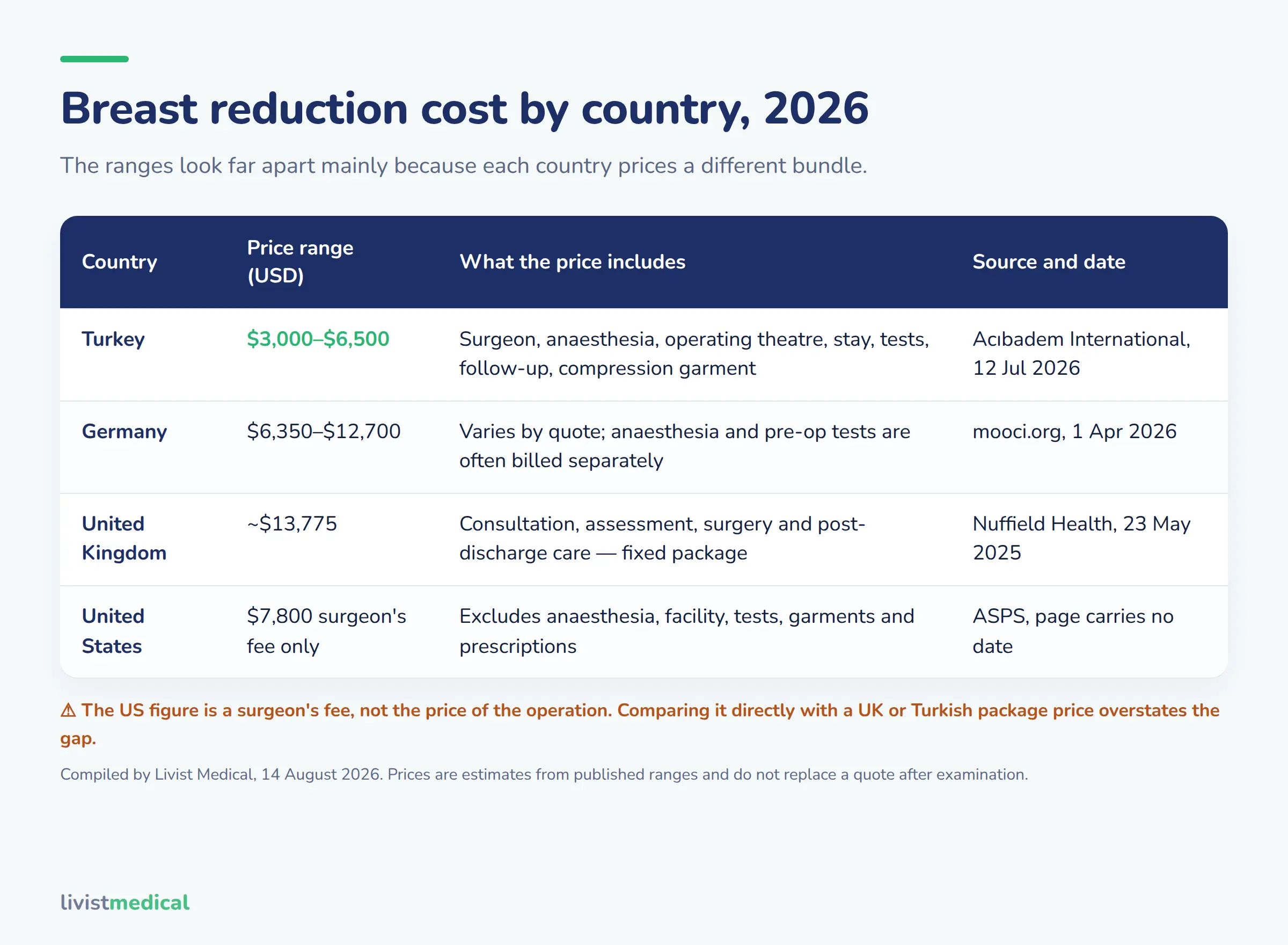
How much does a breast reduction cost in 2026? Compare surgeon-fee vs all-in prices across Turkey, Germany, the UK and the US — with sources.